
Portable Projector vs TV: Which Is Better for Summer Entertainment?
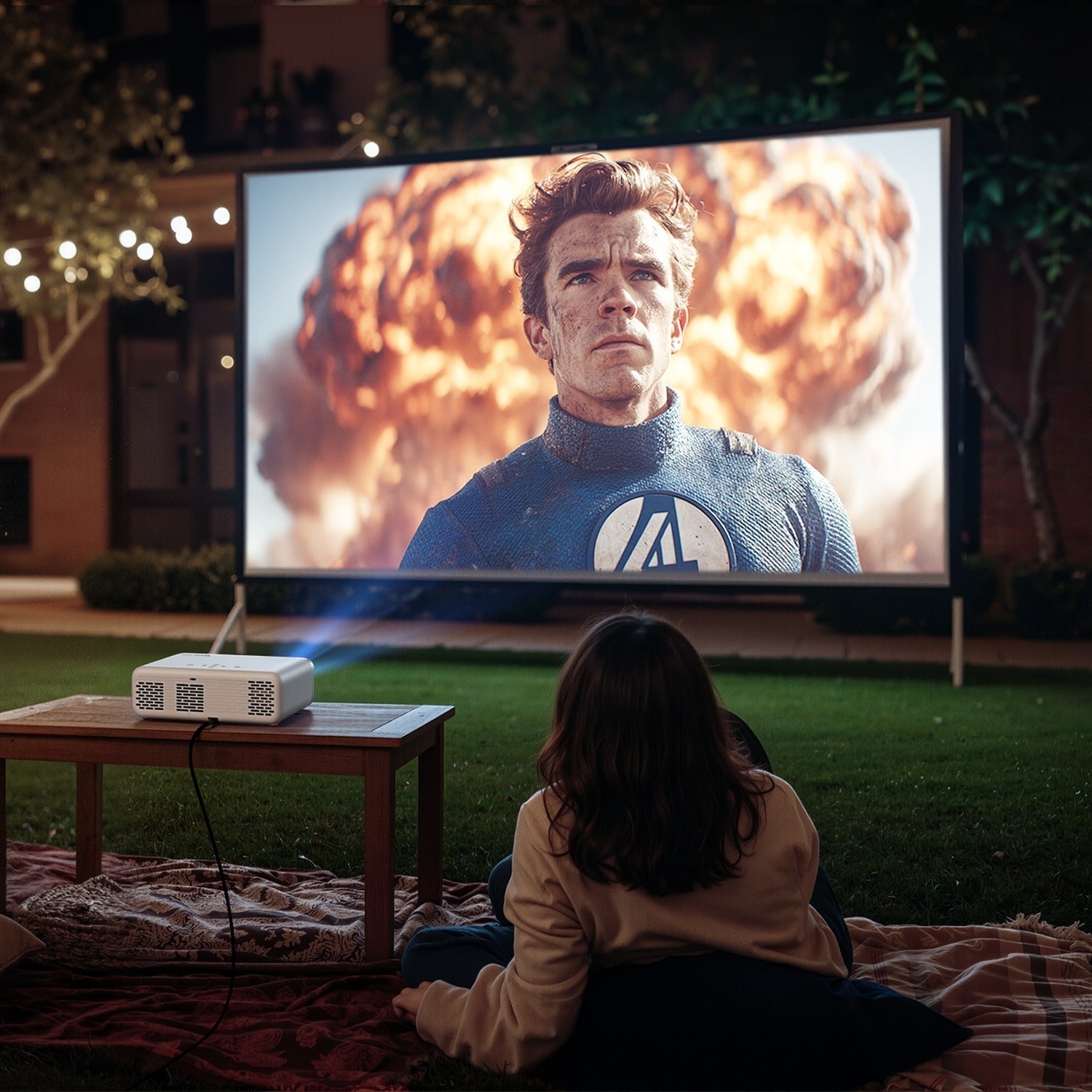
Summer entertainment has changed.
A few years ago, most people thought the choice was simple: buy a bigger TV for the living room and call it done. But now, more families, renters, students, and outdoor movie fans are asking a different question:
Should I get a portable projector instead of a TV?
It is a fair question. A TV is bright, familiar, and easy to use during the day. A portable projector, on the other hand, can turn a bedroom wall, backyard screen, garage door, patio, dorm room, or vacation rental into a big-screen setup without permanently taking over the space.
The better choice depends on how you watch.
For daytime news, bright living rooms, and always-on viewing, a TV is still hard to beat. For summer movie nights, sports watch parties, flexible rooms, travel, camping, and a true “big screen without the big TV” experience, a portable projector can make a lot more sense.
Let’s break it down like a projector editor would: not by hype, but by real use.
Quick Answer: Projector or TV?
Choose a TV if you want:
- Bright daytime viewing
- A fixed screen in one room
- Simple cable or live TV watching
- Minimal setup every time
- Strong picture quality in bright rooms
Choose a portable projector if you want:
- A much larger screen for the money
- Backyard movie nights
- A flexible bedroom or apartment setup
- Movie nights that feel more social
- Easy storage when not in use
- Travel, camping, dorm, or patio viewing

The best answer is not always “projector” or “TV.” It is about where you watch, when you watch, and how often you need the screen to move.
Projector vs TV: The Main Difference
A TV is a fixed display. You buy a screen size, place it in one room, and that is where it stays.
A projector is a flexible display. The screen size changes depending on distance, wall space, screen choice, and lighting. That flexibility is what makes projectors attractive for summer entertainment.

A TV is more convenient for routine use. A projector is more flexible for shared experiences.
That difference matters most in summer, when people are moving between the living room, backyard, patio, vacation home, RV, or dorm.
Screen Size: Where Projectors Win Big
The most obvious advantage of a projector is screen size.
A 65-inch TV may feel large in a living room. But a portable projector can often create an 80-inch, 100-inch, or even larger image when the room and lighting are right.
That changes the feeling of the experience.
A movie feels more cinematic. A sports game feels more social. A family slideshow feels more fun. A backyard movie night feels like an event rather than just another night of streaming.
For summer entertainment, this is the projector’s biggest strength: it lets you create a big-screen moment without permanently installing a giant display.
A TV wins when you want the same screen in the same place every day. A projector wins when you want flexible size and atmosphere.

Brightness: Where TVs Still Have the Advantage
This is where the TV side has a strong point.
TVs are designed for bright rooms. They perform well during the day, with lamps on, windows open, and sunlight in the room. That makes them better for casual daytime viewing, news, live TV, and background content.
Projectors need more control over light. Even a good projector will look better when the room is dim or dark. Outdoors, timing matters even more. A backyard projector works best after sunset, not during the afternoon.
So the brightness question is simple:
- Watching in daylight? A TV is better.
- Watching movies at night? A projector can be more immersive.
- Hosting outdoor summer movie nights? A projector is the practical choice.
- Watching sports before sunset? Choose a brighter projector and control nearby light.
A projector is not trying to be a TV in broad daylight. It is built for a different kind of experience: bigger, more flexible, and more cinematic when the lighting is right.
Outdoor Use: Projectors Are Built for the Backyard Moment
This is the biggest reason summer buyers consider a projector.
A TV can technically be placed outside, but for most people it is not practical. You have to worry about weather, power, glare, storage, dust, heat, and the cost of an outdoor-rated TV.
A portable projector is different. You can set it up for the night, use a screen or smooth wall, connect audio, enjoy the movie, then pack everything away.
For a better outdoor projector setup:
- Start 30–60 minutes after sunset
- Use a portable outdoor screen if possible
- Keep lights away from the screen
- Place speakers near the audience
- Keep the image size realistic
- Test Wi-Fi and power before guests arrive
This is where a projector becomes more than a screen. It becomes the center of a summer gathering.
Backyard movies, neighborhood sports nights, camping trips, patio hangouts, and family reunions are all natural projector moments.

Portability: The Hidden Advantage of a Projector
A TV is usually locked to one place. Even a smaller TV is awkward to move, and a large TV is not something most people want to carry between rooms.
A portable projector solves that problem.
You can use it in:
- a bedroom
- a living room
- a dorm room
- a backyard
- a garage
- an RV
- a vacation rental
- a campsite
- a patio or balcony
That flexibility is especially useful for renters and students. You can create a big-screen setup without drilling into walls, buying a large TV stand, or committing to one room.
For people who move often, live in smaller homes, or want entertainment that can travel, a portable projector is often the smarter choice.
Setup: TVs Are Simpler, Projectors Are More Flexible
A TV wins on everyday simplicity. Press the power button, open an app, and start watching.
A projector takes a little more thought. You need to consider placement, distance, focus, keystone correction, screen surface, sound, and lighting.
But modern smart projectors have made setup much easier. Auto focus, auto keystone, built-in stands, wireless casting, Google TV, Roku TV, Bluetooth, and compact designs all reduce the old projector friction.
The key is expectation.
A projector is not difficult, but it is more environmental than a TV. Your wall, screen, lighting, and seating all shape the result.
For summer movie nights, that little extra setup is usually worth it. For quick daytime viewing while making lunch, a TV still wins.
Streaming: Smart Projectors Feel More Like TVs Now
One reason projectors are becoming more popular is that smart projector systems are much better than they used to be.
Older budget projectors often required extra sticks, cables, adapters, or complicated casting. Today, smart projectors with Google TV or Roku TV feel much closer to using a regular TV.
That matters for families.
Nobody wants to spend 20 minutes troubleshooting apps when guests are waiting outside. A good smart projector should make streaming feel familiar.
Look for:
- built-in Google TV or Roku TV
- simple app access
- HDMI input
- Wi-Fi support
- Bluetooth audio
- easy remote control
- screen mirroring when needed
This is one reason Aurzen’s smart projector lineup fits the summer entertainment conversation well. The less time you spend setting up, the more time you spend watching.
Sound: TVs Are Predictable, Projectors Need the Right Setup
Most TVs have built-in speakers that are good enough for everyday viewing. They may not be cinematic, but they are usually fine for news, sitcoms, and casual streaming.
Portable projectors vary more.
Some compact projectors are loud enough for a bedroom but not strong enough for a backyard. Others include better built-in audio and work well for casual movie nights.
For outdoor viewing, external audio is almost always helpful. Open air spreads sound quickly, so dialogue can feel quieter outside than it does indoors.
For best results:
- Use built-in speakers for bedrooms and small rooms
- Add Bluetooth audio for backyard movie nights
- Place the speaker near the seating area
- Use subtitles for late-night viewing
- Keep volume neighbor-friendly
A projector can sound good, but outdoor audio should be planned instead of assumed.
Gaming: It Depends on the Type of Player
A TV is usually the safer choice for competitive gaming because of brightness, refresh rate, and low input lag.
But a projector can be a lot more fun for casual gaming.
Mario Kart, party games, sports games, co-op games, and family gaming can feel more exciting on a huge projected image. For summer hangouts, that can be the whole point.
Choose a projector for gaming if you want:
- a larger screen
- a social party setup
- casual console gaming
- outdoor or garage gaming nights
Choose a TV if you want:
- competitive play
- very low input lag
- bright daytime gaming
- the sharpest image in all lighting
For most casual players, a smart projector with HDMI can be a fun summer upgrade. For serious competitive gaming, a TV or dedicated gaming projector is the safer route.
Cost and Value: Bigger Screen for Less Space
A large TV can be expensive, heavy, and difficult to move. Once you go above 75 inches, price and space become real considerations.
A portable projector can deliver a much larger image without taking over your room. That is where the value shows up.
You are not just buying a screen. You are buying flexibility.
A projector can be:
- Your bedroom movie screen
- Your backyard theater
- Your travel entertainment setup
- Your dorm room display
- Your holiday movie night screen
- Your game-night centerpiece
A TV may be better for one permanent spot. A projector can serve several spaces.
That makes the value equation different.
When a TV Makes More Sense
A TV is still the better choice if:
- You watch mostly during the day
- Your room has lots of sunlight
- You want zero setup
- You watch live TV constantly
- You need the screen always ready
- You care most about bright-room performance
There is no need to force a projector into the wrong use case. For everyday daytime watching, a TV is still excellent.
When a Portable Projector Makes More Sense
A portable projector is the better choice if:
- You want a much bigger screen
- You host summer movie nights
- You want outdoor entertainment
- You live in a small apartment or dorm
- You want a screen you can store away
- You travel, camp, or move between rooms
- You want a more cinematic experience at night
This is where a projector shines: not as a full TV replacement for everyone, but as a more flexible entertainment tool.
Where Aurzen Fits
Aurzen’s projector lineup makes the projector-vs-TV decision easier because different models serve different viewing habits. For this topic, two models stand out: Aurzen BOOM mini and Aurzen EAZZE D1R Cube Roku TV Smart Projector.
Aurzen BOOM mini: Best for Big-Screen Google TV Entertainment
The Aurzen BOOM mini Google TV Smart Projector is a strong fit for people who want a portable projector that still feels like a real home entertainment device.
It is best for:
- living rooms
- bedrooms
- patios
- backyard movie nights after sunset
- casual gaming
- families who want Google TV built in
BOOM mini is listed with 500 ANSI lumens, native 1080p resolution, Google TV, real-time focus, real-time keystone correction, and dual 10W speakers. That makes it a practical choice for users who want a brighter, more complete portable projector for summer streaming and home entertainment.
Choose BOOM mini if you want the projector experience to feel closer to a smart TV, but with a much larger and more flexible screen.

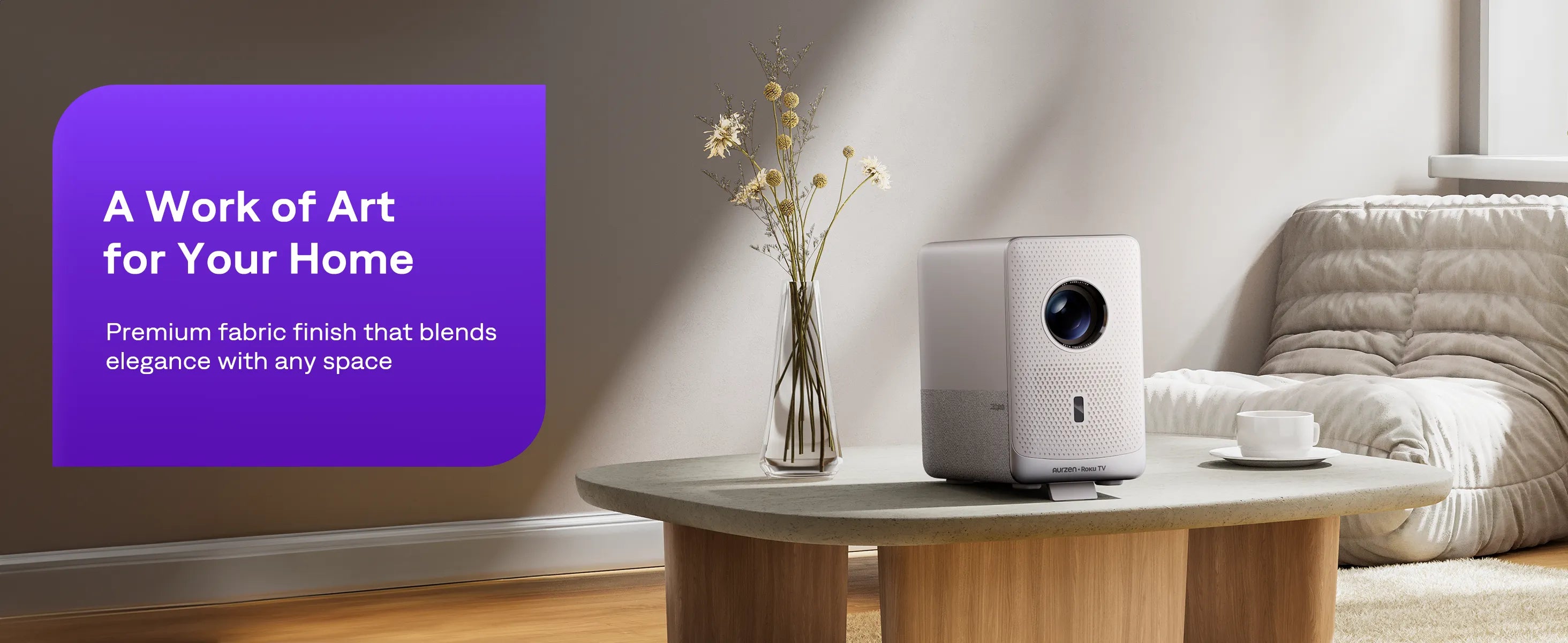
Aurzen EAZZE D1R Cube Roku TV Smart Projector: Best for TV-Like Simplicity
The Aurzen EAZZE D1R Cube Roku TV Smart Projector is best for users who want the easiest transition from TV to projector.
Its biggest advantage is the built-in Roku TV experience. If your family already understands Roku, the D1R Cube feels familiar from the start. Apps, menus, and streaming access are easier for guests, kids, and less tech-heavy users.
It is best for:
- bedrooms
- dorm rooms
- casual living room use
- Roku users
- simple streaming setups
- families who want fewer extra devices
Choose EAZZE D1R Cube if your top priority is simplicity. It is the better fit for people who want a projector that behaves more like a TV, without needing a separate streaming stick.
Projector vs TV: Which Should You Choose for Summer?
Here is the clean buying answer:

For many homes, the best setup may be both: a TV for everyday daytime viewing and a portable projector for summer nights, movies, sports, and flexible big-screen moments.
Editor’s Recommendation
Choose a TV if your main goal is daily convenience in a bright room.
Choose a portable projector if your main goal is bigger, more flexible entertainment—especially for summer movie nights, backyard viewing, bedrooms, dorms, and travel.
For Aurzen shoppers:
- Choose BOOM mini for a brighter Google TV projector with stronger everyday entertainment features.
- Choose EAZZE D1R Cube for a Roku TV projector that feels simple, familiar, and easy to use.
The right choice is not about replacing every screen in your home. It is about choosing the screen that fits the moment.
For summer, the projector moment is hard to beat.
Final Takeaway
A TV is still the best choice for bright rooms, daytime viewing, and always-on convenience. But a portable projector brings something different: scale, flexibility, and atmosphere.
That is why projectors make so much sense for summer entertainment. They can turn a backyard, bedroom, patio, dorm room, or vacation rental into a big-screen space without locking you into one permanent setup.
If you want a more cinematic summer setup, a portable projector is not just a TV alternative. It is a different kind of experience.
FAQs
1. Is a projector better than a TV for summer entertainment?
A projector is better for summer movie nights, backyard viewing, camping, and flexible big-screen setups. A TV is better for bright daytime rooms and everyday always-on viewing.
2. Can a portable projector replace a TV?
A portable projector can replace a TV for many night-time uses, such as movies, streaming, sports, and casual gaming. However, a TV is still better for bright rooms and daytime viewing.
3. Is a projector good for outdoor movie nights?
Yes. A projector is one of the best options for outdoor movie nights when used after sunset with a stable screen, controlled lighting, and good audio.
4. Is a TV or projector better for a small apartment?
A projector can be better for small apartments because it does not require a permanent large screen. You can project onto a wall or screen, then store the projector when not in use.
5. What is the best projector for summer movie nights?
The best projector for summer movie nights should have native 1080p resolution, enough ANSI brightness for after-dark viewing, easy setup, reliable streaming, and good audio or Bluetooth support.
6. Which Aurzen projector is best for a TV-like experience?
The Aurzen EAZZE D1R Cube Roku TV Smart Projector is best for users who want a TV-like streaming experience with built-in Roku TV.
7. Which Aurzen projector is best for big-screen summer entertainment?
The Aurzen BOOM mini Google TV Smart Projector is a strong choice for users who want a brighter portable smart projector for bedrooms, living rooms, patios, and backyard movie nights.
8. Can I use a projector outside during the day?
For most home projectors, daytime outdoor use is not recommended. Outdoor projection works best after sunset or when the screen area is dark enough.
Read More
- How Many ANSI Lumens Do You Need for Outdoor Movies?
- Best Portable Projector 2026: Home, Outdoor, Bedroom & Travel Guide
- Projector vs TV for Watching Soccer: Which Is Better?
- How to Watch Fast-Moving Sports Without Motion Blur on a Projector
- Outdoor Projector Setup for a Soccer Watch Party


